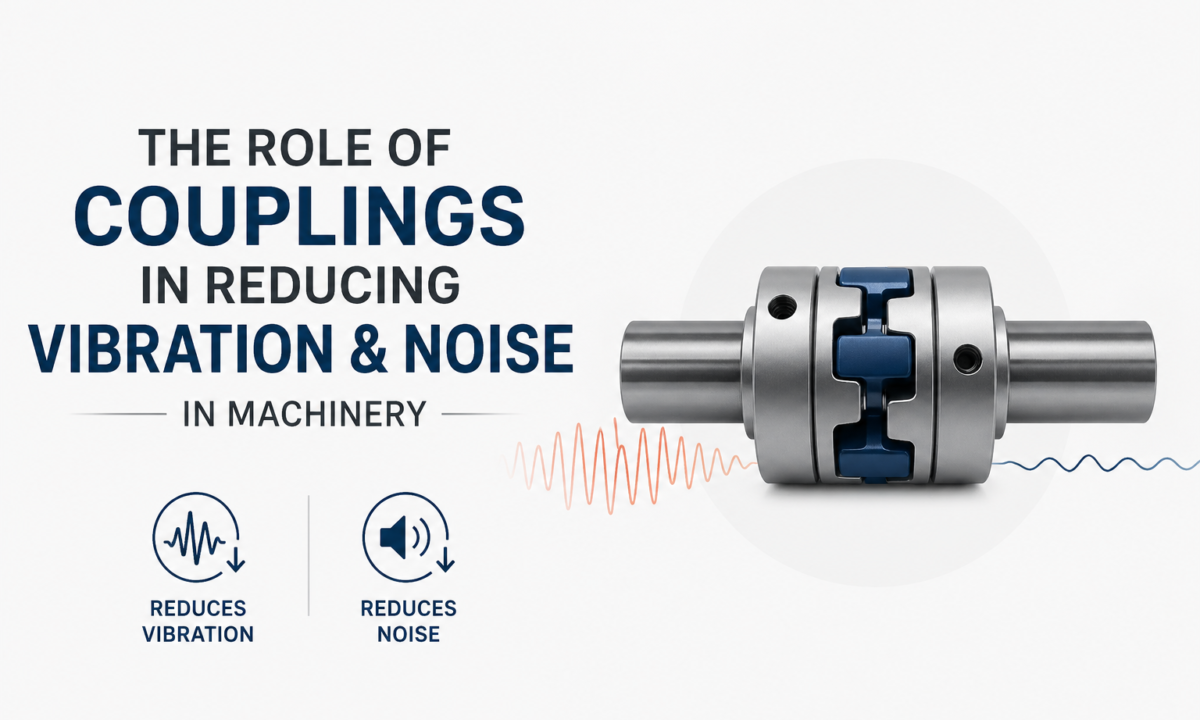
The Role of Couplings in Reducing Vibration and Noise in Machinery
If you’ve ever stood next to a machine that’s constantly vibrating, or making that irritating humming or rattling sound, you already know – it’s not just annoying, it’s a sign something is wrong.
In most industrial environments, vibration and noise do not just occur randomly. They are often built up over a period of time because of misalignment, uneven loads, or wear and tear. If ignored, however, they can silently damage your equipment and increase maintenance costs.
But interestingly enough, a small part, such as a coupling, can make a big difference here.
So, where do vibration and noise actually come from?
In the real world of operations, machines are rarely “perfect.” Any small deviation can cause problems.
Some of the more common reasons are
- Shafts are not in perfect alignment
- Sudden changes in load during operation
- Imbalance of rotating parts
- Loose or worn clutch or brake components
All this causes unwanted motion, and that motion becomes vibration. That vibration eventually becomes noise, and then damage.
How couplings quietly fix the problem.
Couplings are not just for connecting two shafts. The right one actually stabilizes the whole system.
1. They absorb shocks (like a pillow)
In many machines, loads don’t come in smoothly; they come in suddenly. This is taken care of by flexible couplings. They absorb these shocks rather than passing them on, helping to reduce sudden jerks and vibrations.
2. They handle misalignment better than you think
Let’s face it, real setups seldom have perfect alignment. Small misalignments can be compensated for by flexible couplings:
- Angular
- Parallel
- Axial
They don’t force everything into place ( that causes stress ), they allow a little wiggle room, which reduces strain and vibration.
3. They dampen ongoing vibrations
Some couplings don’t just absorb shocks; they also keep the machine from vibrating while it’s running.
Especially the ones with rubber or elastomer parts, which act like dampers to keep things smoother and more stable.
And what about noise?
Here’s the thing: most machine noise is vibration.
So less vibration, necessarily, means less noise. But couplings are useful in a few other ways:
1. Smoother power flow
A good coupling gives the power transmission a smooth, not jerky, character.
Less fluctuation = less noise.
2. They stop vibrations from moving around.
Imagine a coupling as a buffer between two machines.
It helps keep noise down in the whole system by stopping vibration from moving from one part to the next.
3. Less harsh contact between parts
When metal touches, it makes the noise worse. This happens a lot with rigid setups.
There is an extra layer of rubber or polymer on flexible couplings that makes the connection softer and quieter.
Which couplings work best for this?
Not all couplings work the same way to control noise and vibration.
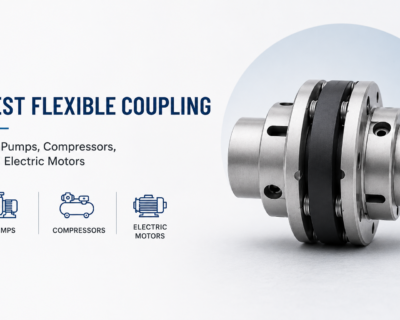
Flexible couplings → A great choice for most situations
Jaw couplings → Easy to use and absorb shocks well.
Gear couplings → better for high torque and moderate vibration control.
Fluid couplings → best when you need a smooth start and little shock.
Why this actually matters (beyond just comfort)
Cutting down on noise and vibration doesn’t just make the machine quieter.
It affects on:
- The life of the equipment
- How often maintenance is done
- Using less power
- Workplace safety
A small drop in vibration can make your machines last a lot longer.
A quick reality check (common mistakes)
Even good couplings won’t work if you use them incorrectly.
Be careful of these things:
- Choosing the cheapest option instead of the best one; not paying attention to alignment during installation
- Using rigid couplings when you need to be able to move around
- Not checking things on a regular basis
Final thoughts
Couplings may look like a small part of a bigger system but are much more important than most people think.
Properly selected and installed couplings don’t just connect shafts – they protect your machines, reduce stress, and keep everything running smoother and quieter.
And that makes a real difference in an industrial setting.
FAQs
- Which coupling is best to reduce vibration?
The most successful are usually flexible couplings with elastomer elements.
- Can couplings eliminate noise completely?
Not entirely – but they can do much to reduce it by controlling vibration.
- Do rigid couplings assist with vibration?
No, they usually make it worse because they don’t absorb motion.