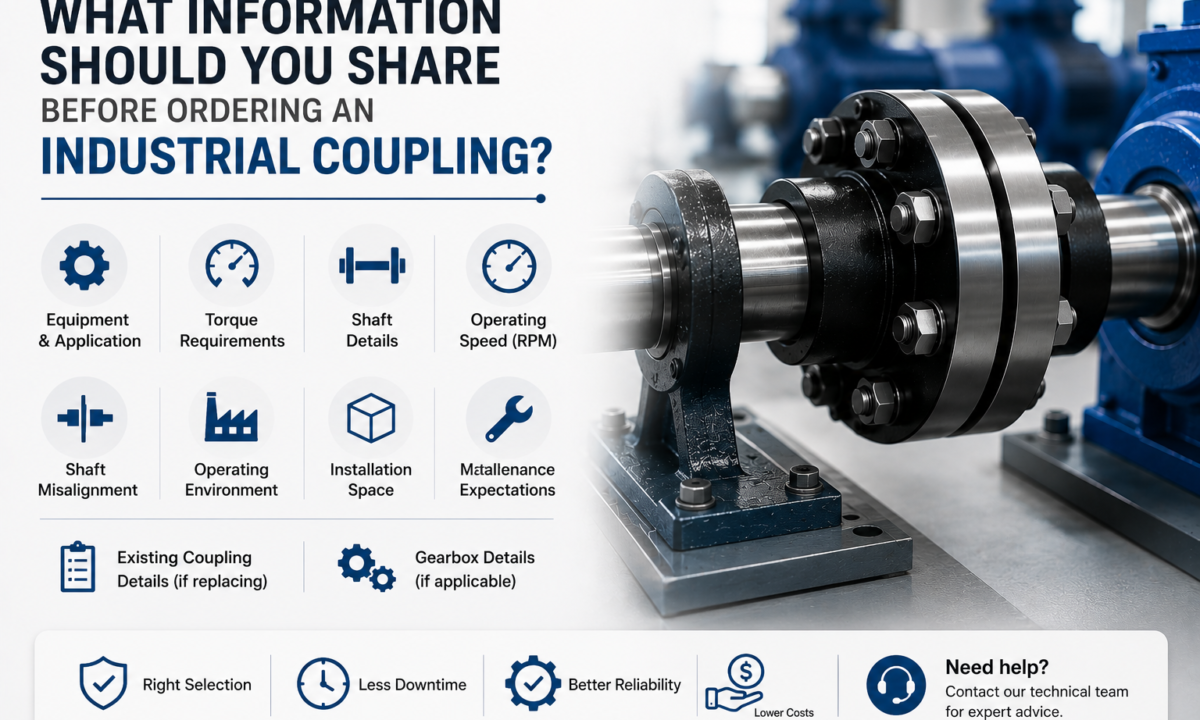
What Information Should You Share Before Ordering an Industrial Coupling?
Ordering an industrial coupling might seem like a simple task – measure the shaft, select a model, and place the order. However, in reality, choosing the wrong coupling can lead to equipment failure, frequent maintenance, and costly production downtime.
Many industrial coupling issues don’t occur because the product is defective; they happen because the coupling wasn’t selected based on the actual operating conditions. Missing details such as torque, shaft dimensions, operating speed, or environmental conditions can result in a coupling that simply isn’t suited for the application.
This is why experienced manufacturers ask several technical questions before recommending a product. While these questions may seem excessive at first, they’re intended to ensure that the coupling performs reliably once it’s installed.
Whether you’re replacing an existing coupling or specifying one for a new machine, sharing the right information upfront helps avoid delays, reduces the chances of ordering the wrong product, and ensures you receive a solution that meets your operational requirements.
Here’s the information you should have ready before ordering an industrial coupling.
1. What Equipment Is the Coupling Being Used For?
The first question any manufacturer is likely to ask is:
“What equipment will the coupling connect?”
This immediately provides context for the application.
For example, the coupling may be used between:
- Electric Motor and Gearbox
- Pump and Motor
- Compressor Drive
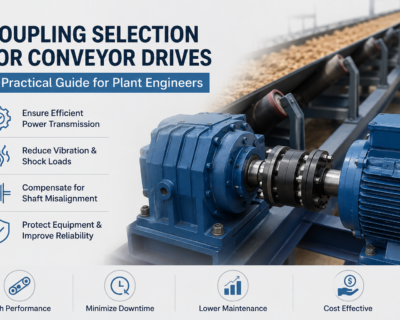
- Conveyor System
- Mixer
- Cooling Tower Fan
- Blower
Although two machines may appear similar, their operating conditions can vary significantly.
A conveyor operating in a cement plant experiences completely different loads compared to a centrifugal pump in a water treatment facility. Likewise, a compressor running continuously requires different coupling characteristics than a mixer operating intermittently.
Providing accurate application details makes it much easier to recommend the most suitable Industrial Coupling for your equipment.
2. Know Your Torque Requirements
One of the most critical pieces of information when selecting a coupling is the amount of torque it needs to transmit.
Unfortunately, many buyers simply provide the motor horsepower while overlooking torque requirements.
To make the right recommendation, manufacturers generally require information such as:
- Rated Torque
- Starting Torque
- Peak Torque
- Shock Loads (if applicable)
Applications involving crushers, conveyors, mixers, and heavy-duty machinery often experience sudden load changes. In such cases, selecting a coupling based only on normal operating conditions can result in premature failure.
If you’re unsure about the torque values, your equipment nameplate or gearbox specifications usually provide useful information.
3. Share Accurate Shaft Dimensions
Even the best coupling won’t perform properly if it doesn’t fit the shafts correctly.
Before placing your order, verify:
- Shaft Diameter
- Bore Size
- Keyway Dimensions
- Shaft Extension Length (if applicable)
Providing accurate dimensions helps eliminate installation issues and prevents unnecessary machining or rework later.
A small measurement error may seem insignificant, but it can delay installation and increase overall project costs.
4. Operating Speed Is Just As Important
Another commonly overlooked specification is operating speed.
Not every coupling is designed to perform efficiently at the same RPM.
Be prepared to share:
- Normal Operating Speed
- Maximum Operating Speed
- Variable Speed Conditions (if applicable)
Higher operating speeds require couplings that maintain stability while minimizing vibration and ensuring smooth torque transmission.
Selecting a coupling outside its recommended speed range can reduce service life and increase maintenance requirements.
5. Is There Any Shaft Misalignment?
Perfect alignment is rare in industrial environments.
Over time, thermal expansion, vibration, equipment settling, and installation tolerances can all introduce shaft misalignment.
Manufacturers usually need to know whether your application involves:
- Angular Misalignment
- Parallel Misalignment
- Axial Movement
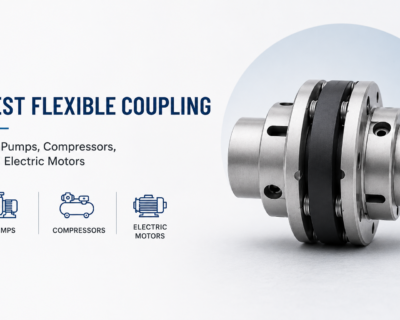
Applications with greater alignment variation often benefit from a Flexible Coupling, which helps compensate for these movements while protecting bearings and connected equipment.
Ignoring misalignment during coupling selection is one of the most common reasons for premature equipment wear.
6. Tell the Manufacturer About Your Operating Environment
Industrial environments differ greatly, and those conditions directly affect coupling performance.
Consider whether your equipment operates in:
- Cement Plants
- Sugar Mills
- Steel Plants
- Chemical Processing Units
- Mining Sites
- Water Treatment Facilities
Also mention environmental conditions such as:
- Dust
- Moisture
- High Temperatures
- Chemical Exposure
- Corrosive Atmospheres
The more information you provide, the easier it becomes to recommend materials and coupling designs suitable for your application.
7. Consider Installation Space
Sometimes the available installation space determines which coupling can actually be used.
If the coupling must fit into a confined area, provide information such as:
- Distance Between Shafts
- Available Axial Space
- Diameter Restrictions
Sharing these dimensions early helps prevent compatibility issues during installation.
8. Discuss Maintenance Expectations
Every facility has different maintenance priorities.
Ask yourself:
- Is lubrication acceptable?
- Is maintenance access limited?
- Does the equipment operate continuously?
- Is downtime particularly expensive?
For applications where maintenance opportunities are limited, choosing a lower-maintenance coupling can significantly reduce long-term operating costs.
9. Replacing an Existing Coupling? Share Its Details
If you’re replacing an existing coupling rather than specifying one for new equipment, provide as much information as possible.
Useful details include:
- Manufacturer Name
- Model Number
- Product Catalogue Number
- Photographs
- Dimensions
- Reason for Replacement
This information helps identify an equivalent or improved replacement while avoiding repeated failures.
10. Don’t Forget Your Gearbox Details
Many buyers focus only on the motor and overlook the gearbox.
However, gearbox specifications play an important role in coupling selection.
If possible, provide:
- Gearbox Model
- Output Torque
- Output Shaft Diameter
- Output Speed
Where high torque transmission is involved, manufacturers may also recommend Full Gear Couplings to handle demanding operating conditions more effectively.
Common Mistakes Buyers Make
Ordering the wrong coupling is often the result of missing information rather than poor product quality.
Some of the most common mistakes include:
- Choosing a coupling based only on price
- Ignoring torque requirements
- Forgetting operating speed
- Providing incorrect shaft dimensions
- Overlooking shaft misalignment
- Not mentioning the operating environment
- Ordering the same coupling without identifying why the previous one failed
Avoiding these mistakes can improve equipment reliability while reducing maintenance costs and unexpected downtime.
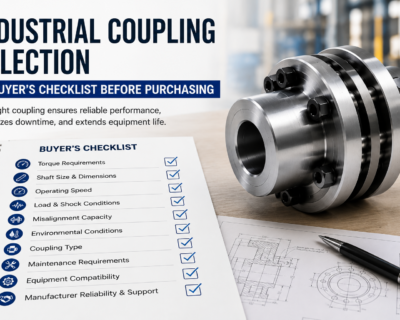
A Simple Checklist Before You Place Your Order
Before contacting your coupling supplier, make sure you have the following information ready:
✔ Equipment Type
✔ Application
✔ Torque Requirements
✔ Shaft Diameter
✔ Bore Size
✔ Operating Speed (RPM)
✔ Shaft Misalignment Details
✔ Environmental Conditions
✔ Installation Space
✔ Existing Coupling Details (if replacing)
Providing these details upfront helps your supplier recommend the most suitable solution without unnecessary delays.
Final Thoughts
Choosing the right industrial coupling begins long before the purchase order is placed. The more information you can provide about your equipment and operating conditions, the easier it becomes to select a coupling that delivers reliable performance and a longer service life.
Taking a few extra minutes to gather details such as torque, shaft dimensions, operating speed, and application requirements can help prevent installation issues, reduce maintenance costs, and minimise unexpected downtime.
Whether you’re replacing an existing coupling or selecting one for a new installation, making an informed decision today can save significant time and money in the future.
Need Help Choosing the Right Industrial Coupling?
Explore our range of Industrial Couplings to find the right solution for your application, or contact our technical team for expert guidance and product recommendations tailored to your equipment and operating requirements.
FAQs
What information is required before ordering an industrial coupling?
You should provide details such as equipment type, application, torque requirements, shaft diameter, operating speed, shaft alignment, environmental conditions, and installation space.
Why are torque values important when selecting a coupling?
Torque determines how much load the coupling must transmit. Selecting a coupling without considering torque can lead to premature failure and equipment damage.
Can I order a coupling using only the shaft size?
No. While shaft size is important, factors such as torque, RPM, misalignment, and operating conditions are equally critical for selecting the correct coupling.
When should I choose a Flexible Coupling?
A Flexible Coupling is generally recommended for applications where vibration reduction, shock absorption, and shaft misalignment compensation are important, such as pumps, compressors, fans, and electric motors.