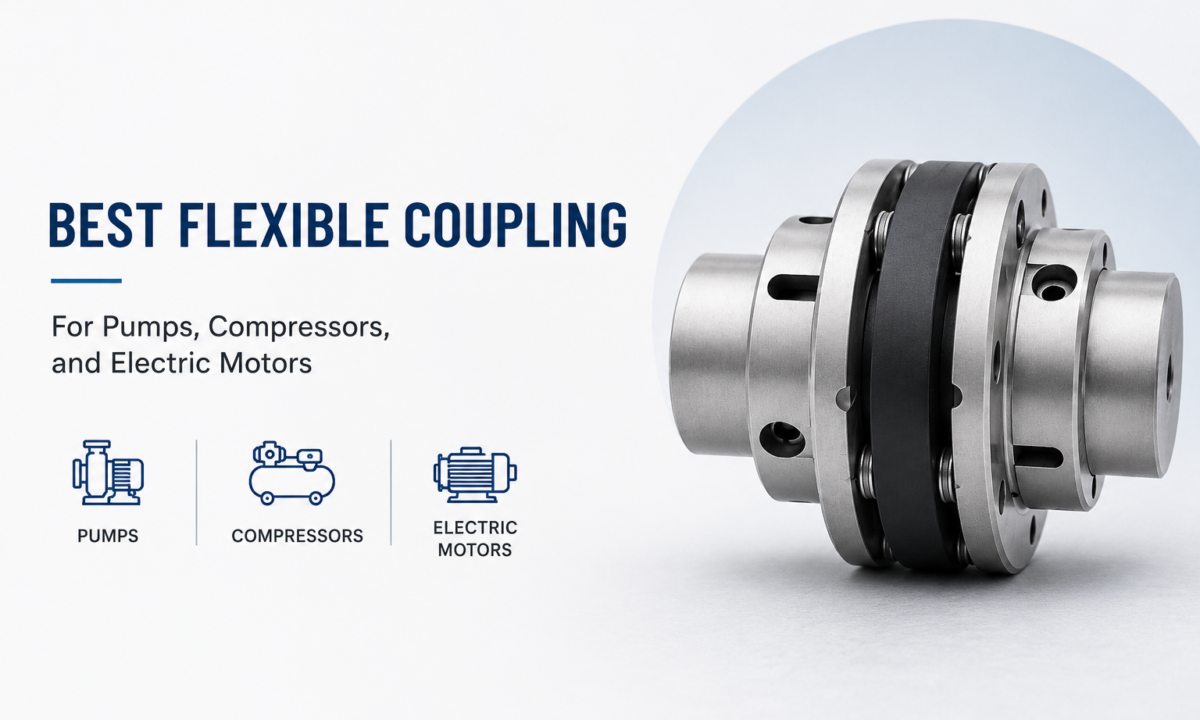
Which Flexible Coupling Is Best for Pumps, Compressors, and Electric Motors?
Industrial equipment such as pumps, compressors, and electric motors forms the backbone of manufacturing plants, process industries, water treatment facilities, HVAC systems, and countless other industrial operations. While these machines are designed to deliver reliable performance, their efficiency largely depends on one often-overlooked component – the Flexible Coupling.
Selecting the wrong coupling can result in excessive vibration, shaft misalignment, bearing damage, premature equipment wear, and costly unplanned downtime. On the other hand, choosing the right Flexible Coupling helps improve power transmission, extend equipment life, and reduce maintenance costs.
In this guide, we’ll explore how to choose the best Flexible Coupling for pumps, compressors, and electric motors, along with the key factors every buyer should consider before making a purchase.
Why Flexible Couplings Matter
A Flexible Coupling connects two rotating shafts while transmitting torque efficiently. Unlike rigid couplings, it accommodates slight angular, parallel, and axial misalignment, reducing stress on connected equipment.
The primary benefits of using a Flexible Shaft Coupling include:
- Smooth power transmission
- Compensation for shaft misalignment
- Reduced vibration and shock loads
- Protection for bearings and gearboxes
- Lower maintenance requirements
- Improved equipment lifespan
These advantages make flexible couplings an ideal choice for a wide range of industrial applications. However, for heavy-duty machinery operating under high torque and severe load conditions, Full Gear Couplings are often preferred due to their superior strength and durability.
Flexible Couplings for Pumps
Industrial pumps often operate continuously and require precise shaft alignment for efficient performance. Even minor misalignment can lead to seal failures, increased vibration, and bearing wear.
Why Pumps Need Flexible Couplings
A Flexible Coupling helps:
- Compensate for minor shaft misalignment
- Reduce vibration transmitted between the motor and pump
- Protect pump seals and bearings
- Improve operational efficiency
Flexible couplings are widely used in:
- Centrifugal pumps
- Chemical process pumps
- Water treatment plants
- Boiler feed pumps
- Irrigation systems
Selecting a high-quality Industrial Coupling ensures efficient power transmission while reducing maintenance costs and extending equipment life.
Flexible Couplings for Compressors
Compressors operate under varying loads and rotational speeds, making reliable power transmission essential.
Poor coupling selection can result in:
- Excessive vibration
- Shaft fatigue
- Bearing failures
- Reduced compressor efficiency
What to Look For
For compressor applications, choose a Flexible Shaft Coupling that offers:
- High torsional flexibility
- Excellent vibration absorption
- Reliable torque transmission
- Long service life
These features help maintain consistent compressor performance while minimizing maintenance costs and unplanned downtime.
Flexible Couplings for Electric Motors
Electric motors power a wide variety of industrial equipment, including pumps, fans, conveyors, mixers, compressors, and processing machinery.
A properly selected Industrial Coupling ensures smooth torque transmission while protecting both the motor and the driven equipment.
Key Benefits
- Reduces startup shock
- Handles minor shaft misalignment
- Protects bearings
- Minimizes vibration
- Improves overall equipment reliability
Whether driving a pump or a conveyor system, electric motors perform more efficiently when paired with the right Flexible Coupling.
Key Factors to Consider Before Choosing a Flexible Coupling
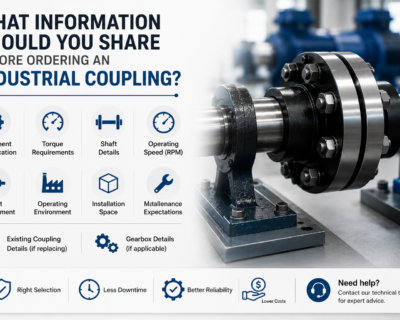
Selecting the right coupling involves much more than matching shaft sizes.
1. Torque Requirements
Before purchasing, determine:
- Running torque
- Starting torque
- Peak torque
Always choose a coupling capable of handling the highest operating load rather than just normal running conditions.
2. Shaft Size
Ensure the coupling matches:
- Shaft diameter
- Bore dimensions
- Keyway size
Incorrect sizing may lead to installation problems, excessive wear, and premature coupling failure.
3. Shaft Misalignment
Evaluate the expected:
- Angular misalignment
- Parallel offset
- Axial movement
Applications experiencing frequent alignment variations require couplings capable of compensating for these movements without damaging connected equipment.
4. Operating Speed
Different couplings are designed for different RPM ranges.
Verify:
- Maximum operating speed
- Continuous operating speed
- Variable-speed conditions
Selecting a coupling outside its recommended speed range may reduce service life.
5. Operating Environment
Industrial environments can be extremely demanding. Consider:
- Dust
- Moisture
- High temperatures
- Chemical exposure
- Corrosive atmospheres
The selected coupling should be capable of withstanding your application’s operating conditions.
Common Mistakes When Selecting a Flexible Coupling
Many industrial facilities experience recurring equipment failures because of improper coupling selection.
Avoid these common mistakes:
- Selecting based only on price
- Ignoring torque requirements
- Choosing the wrong bore size
- Overlooking shaft misalignment
- Ignoring operating conditions
- Failing to consider maintenance requirements
Proper evaluation before purchasing significantly improves equipment reliability and reduces long-term operating costs.
Benefits of Choosing the Right Flexible Coupling
Investing in the right Flexible Coupling provides several long-term benefits:
- Reduced equipment downtime
- Improved power transmission efficiency
- Lower maintenance costs
- Extended bearing and gearbox life
- Increased operational reliability
- Better overall plant productivity
For facilities operating pumps, compressors, or electric motors, these benefits directly contribute to lower operating costs and improved productivity. Where applications require controlled speed reduction and high torque transmission, combining the right coupling with a Cycloidal Gearbox can further improve overall system performance.
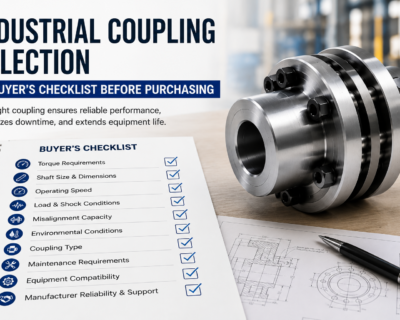
Flexible Coupling Selection Checklist
Before placing an order, confirm the following:
✔ Torque capacity
✔ Shaft dimensions
✔ Bore compatibility
✔ Operating speed
✔ Misalignment requirements
✔ Environmental conditions
✔ Maintenance requirements
✔ Equipment compatibility
Using this checklist helps ensure the coupling is properly matched to your application.
Final Thoughts
Choosing the right Flexible Coupling is essential for ensuring reliable power transmission in pumps, compressors, and electric motors. By evaluating factors such as torque, shaft size, misalignment, operating speed, and environmental conditions, businesses can improve equipment reliability while reducing maintenance costs and minimizing downtime.
Whether you’re replacing an existing coupling or selecting one for a new installation, investing in a high-quality solution can significantly enhance the performance and lifespan of your equipment.
If you’re looking for reliable Flexible Couplings for industrial applications, explore our product range or contact our team for expert guidance in selecting the right solution for your pumps, compressors, electric motors, and other rotating machinery.
FAQs
Which Flexible Coupling is best for pumps?
Flexible couplings that provide excellent vibration damping and misalignment compensation are commonly used for centrifugal pumps, chemical process pumps, and water treatment applications.
Can Flexible Couplings be used with electric motors?
Yes. Flexible couplings are widely used with electric motors to reduce vibration, accommodate shaft misalignment, and improve equipment life.
What should I consider before buying a Flexible Coupling?
Key factors include torque requirements, shaft size, operating speed, shaft misalignment, environmental conditions, and maintenance needs.
Are Flexible Couplings suitable for compressor applications?
Yes. Flexible couplings are ideal for compressors because they absorb vibration, compensate for slight misalignment, and ensure smooth torque transmission.