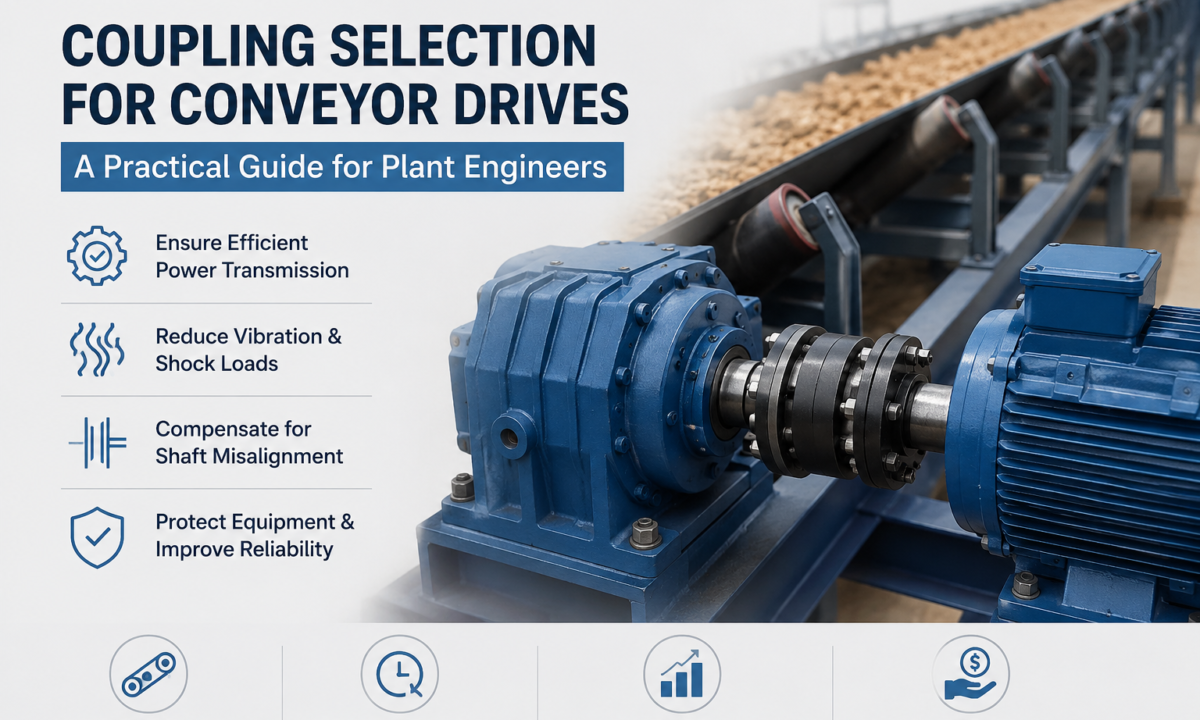
Coupling Selection for Conveyor Drives: A Practical Guide for Plant Engineers.
Conveyor systems are among the most critical components in industrial operations. Whether in cement plants, sugar mills, mining operations, steel plants, or material handling facilities, conveyors ensure the smooth movement of raw materials and finished products throughout the production process.
However, while motors, gearboxes, and conveyor belts often receive the most attention, the industrial coupling connecting these components plays an equally important role. A poorly selected coupling can lead to vibration issues, shaft misalignment, premature gearbox wear, increased maintenance costs, and unexpected downtime.
For plant engineers, selecting the right coupling for a conveyor drive is essential to maintaining operational reliability and maximizing equipment life.
In this guide, we’ll explore the key factors to consider when selecting a coupling for conveyor applications and how the right choice can improve overall system performance.
Why Couplings Are Important in Conveyor Drive Systems
A coupling serves as the connection between the motor, gearbox, and driven equipment. Its primary function is to transmit torque while accommodating minor shaft misalignment and absorbing operational shock loads.
In conveyor systems, couplings help:
- Ensure efficient power transmission
- Reduce vibration
- Compensate for shaft misalignment
- Protect motors and gearboxes
- Minimize wear on rotating components
- Improve system reliability
Without a properly selected coupling, conveyor systems can experience frequent breakdowns and reduced operational efficiency.
Common Challenges Faced by Conveyor Systems
Conveyor drives often operate under demanding conditions that place significant stress on power transmission components.
Typical Challenges Include:
| Challenge | Impact on Equipment |
| Shock Loads | Increased coupling wear |
| Misalignment | Bearing and gearbox damage |
| Continuous Operation | Faster component fatigue |
| Dust and Contamination | Reduced coupling life |
| Heavy Starting Loads | Increased stress on shafts |
| Variable Load Conditions | Power transmission instability |
Selecting the right coupling helps mitigate these challenges and improves equipment longevity.
Key Factors to Consider When Selecting a Coupling
1. Torque Requirements
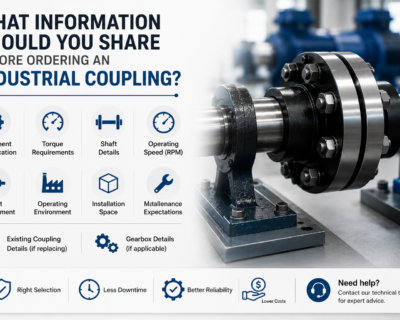
One of the most important considerations is the amount of torque the conveyor system must transmit.
Plant engineers should evaluate:
- Running torque
- Starting torque
- Peak torque
- Shock load conditions
A coupling that is undersized may fail prematurely, while an oversized coupling can unnecessarily increase costs.
2. Conveyor Load Characteristics
Different conveyor systems experience different loading conditions.
| Conveyor Type | Typical Load Condition |
| Belt Conveyor | Moderate |
| Bucket Elevator | High Shock Load |
| Screw Conveyor | Variable |
| Chain Conveyor | Heavy-Duty |
| Apron Conveyor | Very High Torque |
Understanding load characteristics is essential for selecting the appropriate coupling type.
3. Shaft Misalignment
Perfect shaft alignment is rarely achieved in industrial environments.
Engineers should consider:
- Angular misalignment
- Parallel misalignment
- Axial movement
Couplings that accommodate misalignment help reduce stress on bearings, shafts, and gearboxes.
4. Operating Environment
Conveyor systems frequently operate in harsh environments.
Common conditions include:
- Cement dust
- Sugar particles
- Moisture exposure
- High temperatures
- Corrosive atmospheres
The selected coupling should be capable of withstanding the environmental conditions of the application.
Best Coupling Types for Conveyor Drives
Full Gear Couplings
Full Gear Couplings are among the most commonly used solutions for heavy-duty conveyor systems.
Advantages:
✔ High torque capacity
✔ Excellent durability
✔ Suitable for continuous operation
✔ Handles heavy shock loads
Typical Applications:
- Cement plants
- Mining conveyors
- Steel plants
- Material handling systems
Pin Bush Couplings
Pin Bush Couplings are widely used where shock absorption and vibration reduction are important.
Advantages:
✔ Good flexibility
✔ Shock load absorption
✔ Easy maintenance
✔ Cost-effective solution
Typical Applications:
- General industrial conveyors
- Material handling systems
- Packaging lines
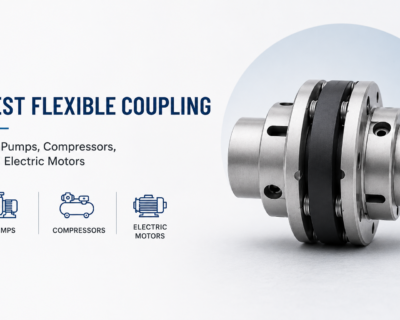
Flexible Couplings
Flexible Couplings are suitable for conveyor systems experiencing shaft misalignment or vibration issues.
Advantages:
✔ Vibration damping
✔ Misalignment compensation
✔ Reduced maintenance
✔ Smooth operation
Typical Applications:
- Light to medium-duty conveyors
- Auxiliary conveyor systems
Coupling Selection Matrix for Conveyor Applications
| Requirement | Recommended Coupling |
| High Torque | Full Gear Coupling |
| Shock Load | Pin Bush Coupling |
| Misalignment | Flexible Coupling |
| Heavy-Duty Conveyor | Full Gear Coupling |
| Low Maintenance | Flexible Coupling |
| Continuous Operation | Full Gear Coupling |
Common Mistakes Plant Engineers Should Avoid
Many conveyor failures can be traced back to improper coupling selection.
Avoid these common mistakes:
- Selecting based only on price
- Ignoring peak torque requirements
- Underestimating shock loads
- Overlooking shaft misalignment
- Choosing the wrong coupling type
- Neglecting environmental conditions
A thorough assessment of operating conditions can significantly improve conveyor reliability.
Benefits of Choosing the Right Coupling
A properly selected coupling can provide:
Reduced Downtime
Reliable couplings minimize unexpected failures and improve operational continuity.
Improved Gearbox Life
Proper torque transmission reduces stress on gearboxes and shafts.
Lower Maintenance Costs
The right coupling reduces wear on connected equipment and minimizes repair expenses.
Enhanced Operational Efficiency
Efficient power transmission contributes to smoother and more productive operations.
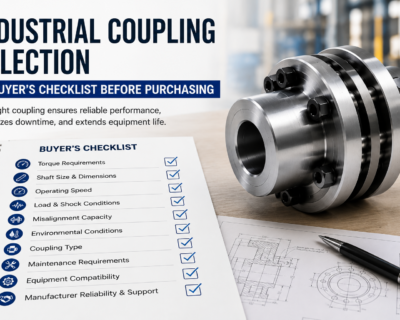
Conveyor Coupling Selection Checklist
Before finalizing your coupling selection, confirm the following:
✅ Torque Requirements
✅ Conveyor Load Type
✅ Shaft Alignment Conditions
✅ Operating Environment
✅ Maintenance Requirements
✅ Expected Service Life
✅ Gearbox Compatibility
✅ Motor Specifications
Using this checklist helps ensure the coupling is properly matched to the conveyor system.
Final Thoughts
Selecting the right coupling for a conveyor drive is critical to ensuring reliable power transmission, minimizing downtime, and maximizing equipment life. Factors such as torque requirements, load conditions, shaft alignment, and environmental challenges should all be considered before making a decision.
Whether your facility operates conveyor systems in cement plants, sugar mills, mining operations, or material handling environments, investing in the right coupling can significantly improve performance and reduce long-term maintenance costs.
For industries seeking reliable power transmission solutions, explore the range of Full Gear Couplings, Pin Bush Couplings, and Flexible Couplings offered byHylo Transmission. Our solutions are engineered to deliver dependable performance across demanding conveyor applications.
Contact Us:Get in Touch with Our Team
FAQs
Which coupling is best for heavy-duty conveyor systems?
Full Gear Couplings are generally preferred for heavy-duty conveyor applications due to their high torque capacity and ability to handle shock loads.
Why is coupling selection important in conveyor drives?
The right coupling improves power transmission efficiency, reduces equipment wear, and minimizes unplanned downtime.
Can Flexible Couplings be used in conveyor applications?
Yes. Flexible Couplings are commonly used where vibration reduction and shaft misalignment compensation are important.
What factors should be considered before selecting a conveyor coupling?
Key considerations include torque requirements, load conditions, shaft alignment, environmental factors, maintenance needs, and operating speed.