Gearboxes for Pharmaceuticals and Why Hygiene and Precision Matter
Gearboxes for pharmaceuticals do far more than transmit power. They sit inside tablet presses, mixers, fillers, and packing lines where product purity and dosing accuracy are non negotiable. A leaking seal or a rough running gear can affect batch quality and trigger costly stoppages.
This guide explains why hygiene and precision matter in pharma gearboxes. It covers the key design requirements, the main gearbox types, and the materials and lubricants used. It also shows how to evaluate a gearboxes for pharmaceuticals manufacturer in India.
Why Gearboxes Are Critical in Pharmaceutical Manufacturing
A gearbox reduces motor speed and raises torque so a machine can move at the exact rate its process needs. In pharmaceutical plants, that rate controls tablet weight, fill volume, mixing time, and sealing quality.
Pharmaceutical manufacturing follows Good Manufacturing Practices, commonly called GMP. These rules aim to prevent contamination and mix ups. Every machine part near the product must support that goal. A gearbox is no exception.
Pharma plants also run long and continuous batches. Gearboxes must deliver stable output hour after hour. Unplanned breakdowns interrupt validated processes and can force a batch to be rejected.
Key Requirements for Pharma Gearboxes
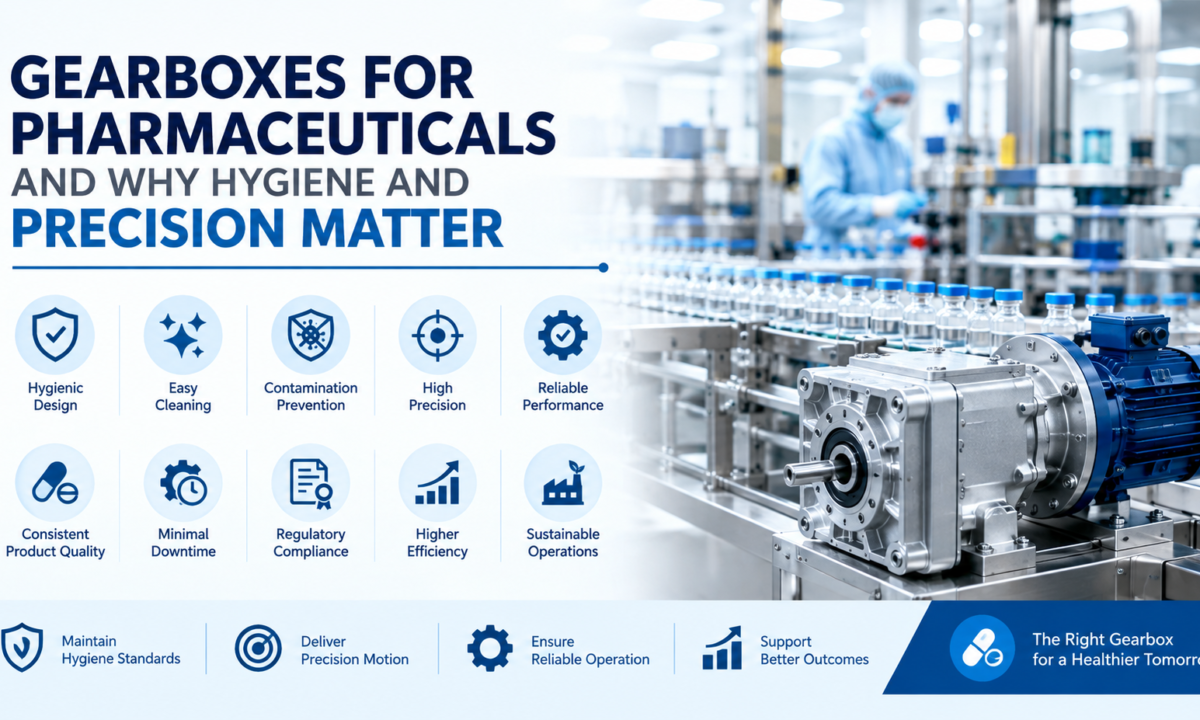
A gearbox built for pharmaceutical duty differs from a general industrial unit. Five requirements stand out.
Hygiene and Contamination Control
Pharma gearboxes need smooth external surfaces with no pockets where powder or residue can collect. Clean lines make wiping and washdown fast and complete. Coatings must resist flaking so that no particles reach the product zone.
Leak Free Design
Oil leakage is a serious contamination risk. Good designs use quality shaft seals, precise housing machining, and proper breathers. Many pharma units use sealed for life lubrication to remove the need for frequent oil handling near the product.
Low Noise and Low Vibration
Cleanrooms and processing halls need quiet equipment. Precision ground gears and accurate assembly reduce noise. Low vibration also protects sensitive machine parts such as dies, punches, and filling nozzles.
Precision and Repeatability
Dosing, filling, and cutting operations depend on consistent motion. Low backlash and tight tolerances keep movement repeatable cycle after cycle. This supports uniform dose weight and consistent pack quality.
Corrosion Resistance and Washdown Capability
Pharma areas use frequent cleaning with water, detergents, and sanitizing agents. Gearboxes need high ingress protection ratings and corrosion resistant finishes. Stainless steel housings and shafts handle repeated washdown well.
Problems Caused by the Wrong Gearbox
A general purpose gearbox in a pharma line often shows problems early. Standard paint can chip and fall into the process area. Open fasteners and ribbed housings trap powder and make cleaning slow.
Higher noise and vibration can also cause wear on dies, punches, and filling parts. Seal failure leads to oil traces on machine frames. Each of these issues can lead to deviations, cleaning delays, and extra downtime.
Types of Gearboxes Used in Pharma Machinery
No single gearbox suits every pharmaceutical machine. The right type depends on torque, speed, space, and cleaning needs.
Helical Gearboxes
Helical gearboxes use angled teeth that mesh gradually. This gives smooth and quiet running with high efficiency. They suit mixers, blenders, conveyors, and general process drives.
Worm Gearboxes
Worm gearboxes give high reduction in a compact body. They run quietly and many models hold position without a separate brake. They suit lifting, indexing, and low speed mixing duties.
Planetary Gearboxes
Planetary gearboxes share load across several gears. They offer high torque density, low backlash, and high positioning accuracy. They suit servo driven filling, cutting, and precision feeding systems.
Bevel Helical Gearboxes
Bevel helical gearboxes turn power through a right angle. They help when machine layout leaves little room for an in line drive. They are often used in granulators and coating pans.
Material and Lubricant Considerations
Material choice decides how well a gearbox handles cleaning and corrosion. Stainless steel grades such as 304 and 316 are widely used for housings, covers, and shafts in product contact zones. Aluminium alloy housings with suitable surface treatment serve lighter duties.
Lubricant choice matters just as much. Pharmaceutical machinery often uses food grade lubricants registered as NSF H1. These are approved for incidental contact with product. They lower risk if a trace of lubricant ever reaches the process area.
Seals deserve equal attention. Seal materials must tolerate the cleaning chemicals and temperatures used in the plant. Regular seal inspection is a core part of preventive maintenance.
Maintenance Practices for Pharma Gearboxes
Preventive maintenance protects both the gearbox and the product. Inspect shaft seals and housing joints for any sign of seepage. Check oil level and condition at the interval the manufacturer recommends.
Keep breathers clean and check that fasteners remain tight. Record temperature and noise readings during routine rounds. A steady rise in either reading is an early warning of wear. Use only the lubricant grade approved for the unit.
Where Gearboxes Are Used in Pharma Plants
Gearboxes drive many machines across a pharmaceutical facility. Common applications include tablet compression machines, capsule filling machines, and blister packing lines. They also power granulators, blenders, coating pans, and sifters.
Bottle filling, capping, and labelling lines use them too. Conveyors that carry containers between stages rely on geared motors for steady speed. Each application sets its own demand for torque, speed, and cleanliness.
Matching the gearbox to the machine is therefore a design task, not a catalogue pick. Torque, duty cycle, mounting position, and cleaning method should all guide the selection.
How to Choose a Gearboxes for Pharmaceuticals Manufacturer in India
India has a large pharmaceutical industry, and many suppliers offer gearboxes. Use the points below to separate capable manufacturers from general suppliers.
First, check pharma experience. Ask which machine builders and plants use the manufacturer’s gearboxes. Second, review design features such as sealing, surface finish, and washdown rating.
Third, confirm material and lubricant options, including stainless steel housings and H1 lubricants. Fourth, ask about precision grades, backlash values, and noise levels. Request test data where available.
Fifth, look for customization. Pharma machines often need special shaft sizes, flanges, and mounting positions. Finally, check support. Ask about documentation, spare parts, lead times, and service response.
Standards and Documentation
Pharmaceutical plants in India work under Schedule M of the Drugs and Cosmetics Rules and follow GMP principles. Many facilities also maintain cleanrooms classified under ISO 14644.
Equipment suppliers support these systems with clear documentation. Useful records include material certificates, lubricant data sheets, test reports, and installation and maintenance manuals. Ask for these documents before you place an order.
Our Approach as a Gearboxes for Pharmaceuticals Manufacturer in India
We design and build gearboxes for pharmaceutical machinery with hygiene and precision as the starting point. We study your machine, duty cycle, and cleaning method before we recommend a model.
Our team offers material, sealing, and lubricant options that match your plant standards. We test each unit before dispatch. We also support installation questions and spare part needs after delivery.
Conclusion
Gearboxes for pharmaceuticals must stay clean, leak free, quiet, and accurate. The right type, material, and lubricant protect product quality and keep validated processes running.
Choose a manufacturer with proven pharma knowledge, strong design features, and dependable support. If you need a gearboxes for pharmaceuticals manufacturer in India, contact our team today. Share your machine details and we will recommend the right gearbox for your application.
Frequently Asked Questions
Why are gearboxes important in pharmaceutical manufacturing?
Gearboxes control the speed and torque of pharmaceutical machines. This affects tablet weight, fill volume, mixing, and sealing. A reliable gearbox keeps processes stable and supports consistent batch quality.
What makes a gearbox suitable for pharmaceutical use?
A suitable gearbox has smooth easy to clean surfaces, leak free sealing, and corrosion resistant materials. It also runs quietly and gives repeatable motion. These features support GMP expectations.
Which types of gearboxes are used in pharma machinery?
Helical, worm, planetary, and bevel helical gearboxes are common. Helical units suit mixers and conveyors. Planetary units suit precision filling. Worm and bevel helical units suit compact and right angle layouts.
Why does hygiene matter in pharma gearboxes?
Gearboxes sit close to product zones. Residue pockets, flaking paint, or oil leaks can contaminate a batch. Hygienic design lowers contamination risk and makes cleaning faster.
What is an H1 lubricant?
An H1 lubricant is a food grade lubricant registered with NSF for incidental contact with product. Many pharmaceutical plants use it in gearboxes near product zones.
Which materials are best for pharmaceutical gearboxes?
Stainless steel grades 304 and 316 are widely used for housings and shafts because they resist corrosion and handle washdown. Treated aluminium suits lighter duties.
What is backlash and why does it matter?
Backlash is the small gap between meshing gear teeth. High backlash reduces positioning accuracy. Low backlash gearboxes support precise dosing, filling, and cutting operations.
Can gearboxes be washed down in pharma plants?
Yes, when designed for it. Washdown gearboxes have high ingress protection, sealed housings, and corrosion resistant finishes. Always follow the manufacturer’s cleaning guidance.
How do I choose a gearboxes for pharmaceuticals manufacturer in India?
Check pharma experience, design features, materials, lubricant options, precision data, customization, and support. Ask for references from machine builders or plants.
Do pharma gearboxes need regular maintenance?
Yes. Inspect seals, oil levels, breathers, and fasteners at fixed intervals. Sealed for life units need less oil handling but still need periodic inspection.
Can gearboxes be customized for pharmaceutical machines?
Yes. Shaft size, flange type, mounting position, housing material, and lubricant can be matched to your machine. Share your drawings and duty details for the right selection.
What information is needed to select a pharma gearbox?
Share the required output speed, torque, and motor details. Add the mounting position, space limits, duty cycle, and cleaning method. These details allow correct sizing.