
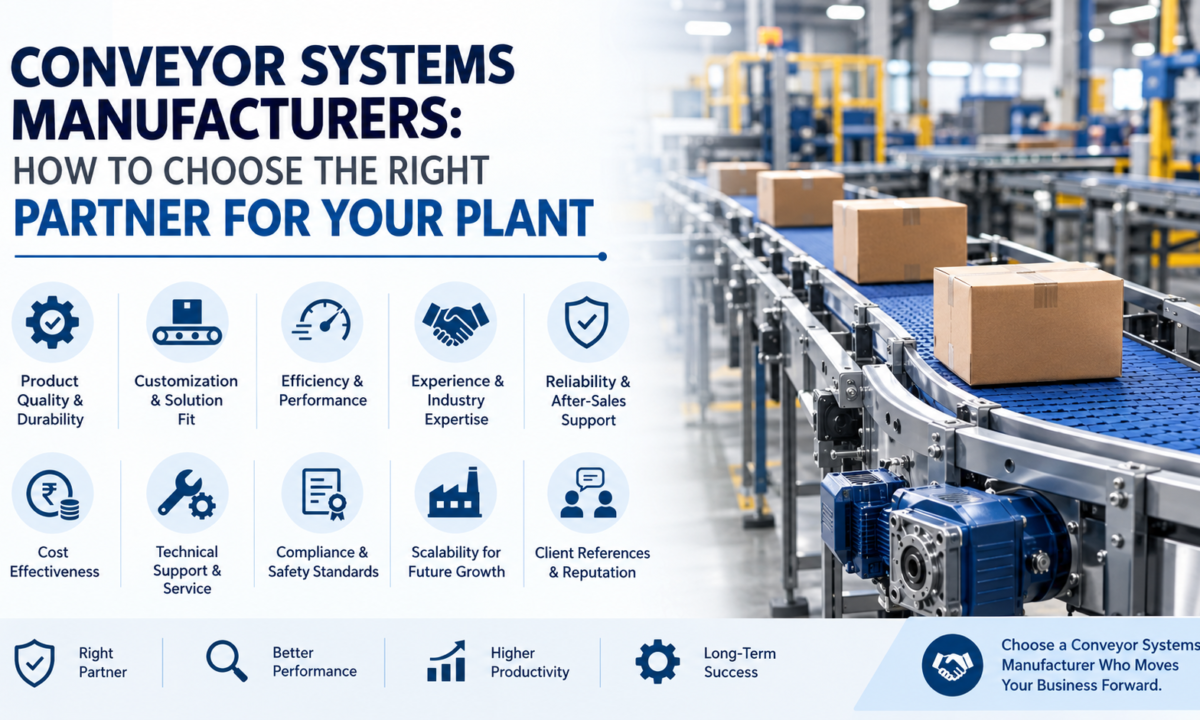
Conveyor Systems Manufacturers: How to Choose the Right Partner
A conveyor system moves material through your plant without manual handling. It affects output, worker safety, and running cost every single day. The right partner supplies equipment that fits your process and lasts for years. The wrong choice leads to downtime, frequent repairs, and wasted floor space.
This guide explains how to compare conveyor systems manufacturers on the points that matter. It also covers why many plants prefer a conveyor system manufacturer in Pune for local support and faster service.
What Is a Conveyor System and Where Is It Used?
A conveyor system is a mechanical setup that carries products, parts, or bulk material from one point to another. It usually includes a frame, a drive unit, belts or rollers, and a control panel.
Conveyors are used in automotive plants, food processing units, pharmaceutical facilities, warehouses, packaging lines, and engineering workshops. They reduce manual lifting and keep material flow steady. They also help plants hold a consistent production rate across shifts.
Types of Conveyor Systems
Each conveyor type suits a different load and layout. Knowing the main types helps you describe your need clearly to any manufacturer.
Belt Conveyors
Belt conveyors run a continuous belt over pulleys. They suit packaged goods, light parts, and bulk material. They run quietly and handle slopes when fitted with the right belt surface.
Roller Conveyors
Roller conveyors use rows of rollers to move cartons, trays, and pallets. Gravity rollers work on a slight slope. Powered rollers give controlled speed and accumulation. They are common in warehouses and dispatch areas.
Chain Conveyors
Chain conveyors carry heavy loads such as pallets, drums, and engine components. They handle rugged duty. Overhead chain conveyors are widely used in paint shops and assembly lines.
Screw Conveyors
Screw conveyors turn a helical blade inside a trough or tube. They move powders and granules along a closed path. This limits dust and spillage.
How a Conveyor System Improves Plant Efficiency
A conveyor system gives material a fixed path and a steady speed. This removes waiting time between process stages. Operators spend less time carrying items and more time on inspection and quality checks.
Conveyors also reduce product damage. Parts and packs move on a controlled surface instead of being lifted and stacked by hand. Floor space improves too, because overhead and inclined conveyors use vertical room.
Accurate counting and sorting become easier when conveyors link with sensors and controls. Plants can then track throughput and spot slow stages early.
Seven Factors to Check Before Choosing a Conveyor System Manufacturer
Price alone does not show the value of a conveyor. Use the seven checks below to compare conveyor systems manufacturers fairly.
Experience in Your Industry
Check whether the manufacturer has built conveyors for your industry. Food lines need washdown designs. Pharmaceutical areas need clean surfaces. Foundries need heat resistant parts. Ask for installation references from similar plants.
Customization Ability
Standard models rarely match every layout. A good manufacturer studies your product size, weight, speed, and floor plan before designing. In house design and fabrication allow changes to happen fast.
Build Quality and Materials
Ask about frame material, roller grade, bearing brand, and surface finish. Mild steel, stainless steel, and aluminium each suit different environments. Quality inputs reduce wear and breakdowns.
Drive and Gearbox Selection
The motor and gearbox decide how smoothly a conveyor runs. Reliable geared motors hold speed steady under load. Confirm the brand, the rating, and the availability of spares.
Safety and Compliance
Conveyors need guards, emergency stop devices, and covers over moving parts. Ask how the manufacturer applies safety practices. Ask what testing happens before dispatch.
Installation and Commissioning
Good equipment still needs correct installation. Check whether the manufacturer handles site measurement, erection, alignment, and trial runs with its own team.
After Sales Support and Spares
Conveyors often run for long hours every day. Ask about response time, preventive maintenance plans, and spare part stock. Local support cuts downtime sharply.
Common Mistakes Buyers Make
Many buyers choose the lowest quotation and ignore the specification behind it. A cheaper conveyor often uses lighter frames, lower grade bearings, or undersized drives. This raises repair cost later.
Other common mistakes include skipping the site survey and ignoring future capacity. Some buyers also forget maintenance access. Leave enough room around the conveyor for inspection, lubrication, and part replacement.
Conveyor Maintenance Basics
Regular maintenance keeps a conveyor running for its full service life. Belts need correct tension and tracking. Chains need proper lubrication and alignment checks. Rollers and bearings need inspection for noise, heat, and play.
Motors and gearboxes need oil level checks and a clean breathing area. Fasteners and guards should be checked after the first weeks of operation and then at fixed intervals. A written maintenance log helps teams plan spares and avoid sudden stoppages.
Why Choose a Conveyor System Manufacturer in Pune?
Pune is one of India’s main manufacturing centres. Industrial areas such as Chakan, Pimpri Chinchwad, Ranjangaon, and Talegaon host automotive, engineering, FMCG, and pharmaceutical units.
A conveyor system manufacturer in Pune works close to these clusters. Site visits are quick. Layout studies happen on the actual shop floor. Installation teams reach your plant within hours.
Local suppliers of steel, motors, bearings, and electricals also shorten lead times. Buyers can visit the workshop and see equipment in operation before they place an order.
Regional presence also means the manufacturer understands local factory layouts, power conditions, and working practices. This knowledge leads to practical designs that suit Indian plant conditions and are easy to service.
What a Good Quotation Should Include
A clear quotation lists the conveyor type, length, width, and rated load. It names the drive, gearbox, bearings, and belt or chain specification. It also states the frame material and surface treatment.
Look for delivery time, payment terms, and warranty cover in writing. A quotation that lists installation, commissioning, and training separately makes the full cost easy to understand. Vague quotations make comparison difficult and hide gaps in scope.
Questions to Ask Before Placing an Order
Ask the manufacturer to share a detailed drawing and layout before work begins. Ask which standards the design follows and what load capacity is rated. Ask for the warranty period and what it covers.
Request a clear delivery schedule with stage wise milestones. Confirm who handles installation and operator training. Ask for a written maintenance plan with a list of recommended spares.
Finally, ask for customer references you can contact directly. Clear and prompt answers show a manufacturer that values long term relationships.
Our Approach as a Conveyor System Manufacturer
We begin every project with a study of your product, process, and plant layout. Our team designs the conveyor around your requirement instead of forcing a standard model.
We fabricate, assemble, and test the system before dispatch. Our engineers then support installation and commissioning at your site. After handover, we stay available for maintenance, spares, and upgrades.
Conclusion
Choosing among conveyor systems manufacturers is a long term decision. Look at industry experience, customization, build quality, drive selection, safety, installation, and support. A local partner adds speed and accountability.
If you are looking for a conveyor system manufacturer in Pune, share your requirement with our team. We will study your process and recommend a conveyor system that fits your plant. Contact us today to request a quote.
Frequently Asked Questions
What is a conveyor system?
A conveyor system is a mechanical setup that moves products or material from one point to another. It has a frame, a drive, belts or rollers, and controls. Plants use it to cut manual handling.
What are the main types of conveyor systems?
The main types are belt, roller, chain, and screw conveyors. Belt conveyors suit packaged goods. Roller conveyors suit cartons and pallets. Chain conveyors carry heavy loads. Screw conveyors move powders and granules.
How do I choose among conveyor systems manufacturers?
Compare them on industry experience, customization, build quality, drive selection, safety, installation, and after sales support. Ask for references and a detailed drawing before you decide.
Why should I choose a conveyor system manufacturer in Pune?
A Pune based manufacturer is close to major industrial clusters. This allows quick site visits, faster installation, and prompt service. Local sourcing of steel, motors, and bearings also shortens delivery time.
Can a conveyor system be customized for my plant layout?
Yes. A good manufacturer designs the conveyor around your product size, weight, speed, and floor space. Turns, inclines, and special fixtures can all be built into the design.
Which materials are used to build conveyor systems?
Common materials are mild steel, stainless steel, and aluminium. Mild steel suits general duty. Stainless steel suits food and pharmaceutical areas. Aluminium suits light and clean applications.
How long does a conveyor system last?
A well built conveyor can run for many years. Life depends on load, duty hours, working environment, and maintenance. Regular inspection and timely replacement of wear parts extend service life.
How often does a conveyor need maintenance?
Inspect belts, chains, rollers, and bearings on a fixed schedule. Lubricate moving parts as the manufacturer advises. Many plants run short weekly checks and a detailed monthly inspection.
What information should I share to get a quotation?
Share the product dimensions, weight, and required speed. Add the layout drawing, working environment, and daily running hours. These details help the manufacturer design and price the conveyor correctly.
Do conveyor manufacturers provide installation and commissioning?
Many do. Confirm this before ordering. The scope should cover site measurement, erection, alignment, trial runs, and operator training.
What safety features should a conveyor system have?
A conveyor should have guards over moving parts, emergency stop devices, and safe access points. Pull cords and sensors can be added where long runs need extra protection.
Can conveyor systems be used in food and pharmaceutical plants?
Yes. These plants use stainless steel frames, smooth surfaces, and food grade belts. Designs are made easy to clean and free of areas where residue can collect.