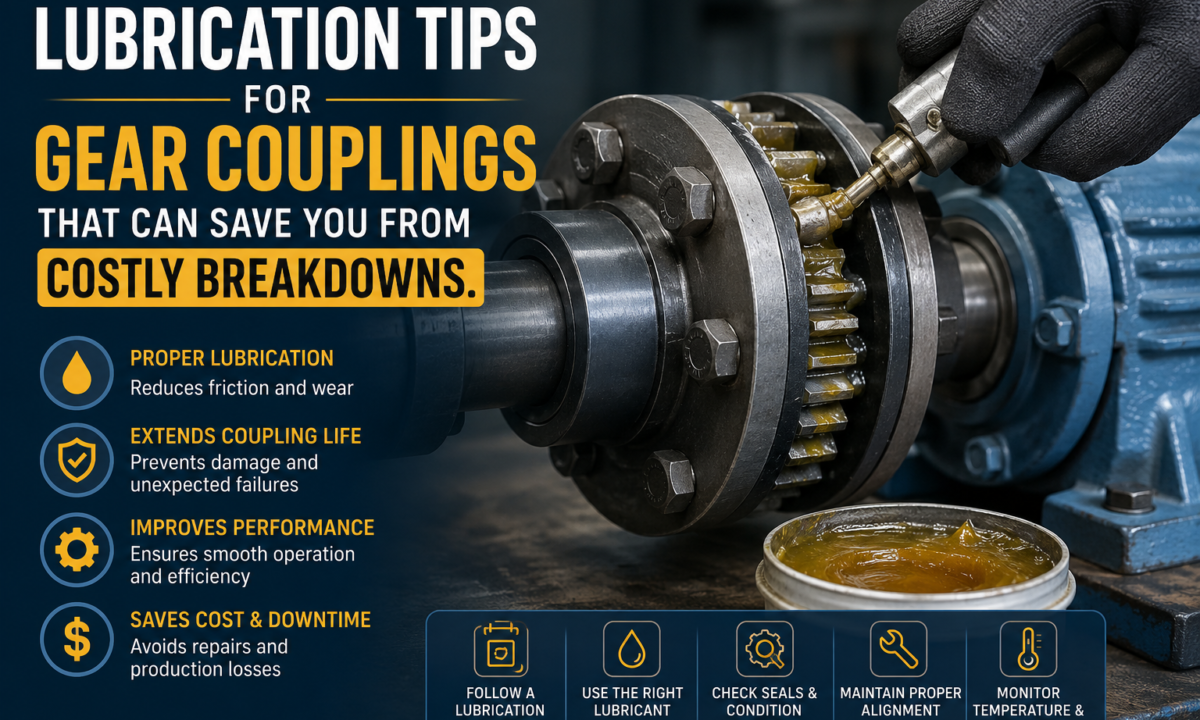
Lubrication Tips for Gear Couplings That Can Save You from Costly Breakdowns.
They quietly do one of the toughest jobs in the power transmission system – transferring heavy torque between rotating shafts while dealing with vibration, shock loads, and slight misalignment in many industries. These gear couplings operate continuously in harsh environments, so regular maintenance is very important.
Poor lubrication is one of the main causes of premature coupling failure in industries.
Whether it’s a motor gearbox coupling in a conveyor system or a heavy-duty coupling used in manufacturing equipment, proper lubrication directly affects performance, efficiency, and equipment lifespan.
If your machinery uses industrial couplings, these practical lubrication tips can help you reduce downtime and improve reliability.
Why Lubrication Matters in Gear Couplings
The teeth of the internal gear couplings are always in contact, under pressure, when rotating at a high speed. Without enough lubrication, friction begins to rise rapidly and can cause:
- Overheating
- excess wear
- vibration
- leakage
- eventual coupling failure
Good lubrication forms a protective film between gear teeth and allows the coupling to run smoothly even under heavy loads.
This is especially important in applications where a motor and gearbox coupling is exposed to continuous operation and fluctuating torque conditions.
1. Use the Right Lubricant for the Application
One of the biggest mistakes to make in industrial maintenance is to use a standard grease for every coupling application.
Depending on the different gear coupling types need different lubrication properties,
- speed of operation
- load conditions
- temperature
- exposure to the environment
High-quality grease with anti-wear and heat-resistant properties is generally preferred for heavy-duty industrial systems.
In applications that employ a flexible gear coupling, proper lubrication is even more important because the coupling is designed to allow for some misalignment while transmitting torque effectively.
2. Follow a Regular Lubrication Schedule
The best lubricant will eventually lose its effectiveness.
Usually, industries are slow in lubricating. The machinery seems to be running fine. But internal wear can start long before any symptoms are visible.
Lubrication of all rotating equipment should be performed at intervals, particularly:
- Conveyor systems
- Crushers
- heavy-duty motors
- And industrial motor gearbox coupling setups.
Machines may need to be lubricated more frequently in dusty or high-temperature environments.
3. Avoid Over-Lubrication
Excessive grease doesn’t mean more protection.
Excess lubrication can cause internal pressure inside the coupling housing, which can lead to:
- Seal wear
- Heat generation
- And grease leakage.
This is a common problem in poorly maintained Lovejoy gear couplings, and the excess grease prevents smooth operation.
The objective should always be balanced lubrication, enough to protect the gear teeth, but not so much as to create unnecessary pressure.
4. Inspect Seals and Check for Contamination
If the seals are damaged, dirt, dust and water can get into the coupling.
Once the lubricant is contaminated, the grease quickly loses its effectiveness and starts damaging the internal gear teeth.
This is particularly dangerous in industries that use helical flexible shaft coupling systems that need smooth rotational movement and alignment to perform.
Always inspect during routine maintenance:
- Seals
- condition of grease
- leakage around the coupling area
5. Clean Old Grease Before Re-Lubrication
One of the most overlooked maintenance practices is cleaning old lubricant properly.
Over time, grease collects:
- metal particles
- debris
- and contaminants
Adding fresh grease over contaminated lubricant reduces overall lubrication quality.
Before applying the new lubricant:
- remove old grease completely
- clean the coupling surfaces
- and inspect for unusual wear patterns
This simple process can significantly extend the lifespan of industrial gear couplings.
6. Monitor Temperature and Vibration
Most couplings do not fail catastrophically. Normally, machines show signs of warning ahead of time.
If you observe:
- increased vibration
- overheating
- unusual noise
- lubricant leakage
There may be lubrication or alignment problems already developing.
In many cases, excessive vibration in a motor and gearbox coupling arrangement is a symptom of uneven load distribution or lack of lubrication in the coupling .
Early checking can save costly breakdowns and loss of production time.
7. Proper Alignment Improves Lubrication Performance.
Lubrication and alignment go together.
Uneven coupling tooth pressures occur when shafts are misaligned. This has an effect on the distribution of lubricant and increases wear.
This alignment is critical in systems employing a flexible gear coupling or helical flexible shaft coupling to provide smooth transmission of torque and reduce stress on the rotating components.
Regular checks for alignment help:
- improve coupling efficiency
- reduce vibration
- increase lubricant life
Final Thoughts
Industrial gear couplings are designed for tough applications, but even the most rugged coupling needs proper lubrication and maintenance to ensure reliable performance.
Simple practices such as:
- Using the proper lubricant
- following lubrication routines
- inspecting seals
- monitoring vibration
- and maintaining alignment
This can greatly improve equipment efficiency and reduce unplanned failures.
Whether your system uses a lovejoy gear coupling, a motor gearbox coupling, or other industrial gear coupling types, consistent lubrication remains one of the most effective ways to increase equipment lifespan and reduce maintenance costs.
In industrial operations, small maintenance habits often make the biggest difference over time.