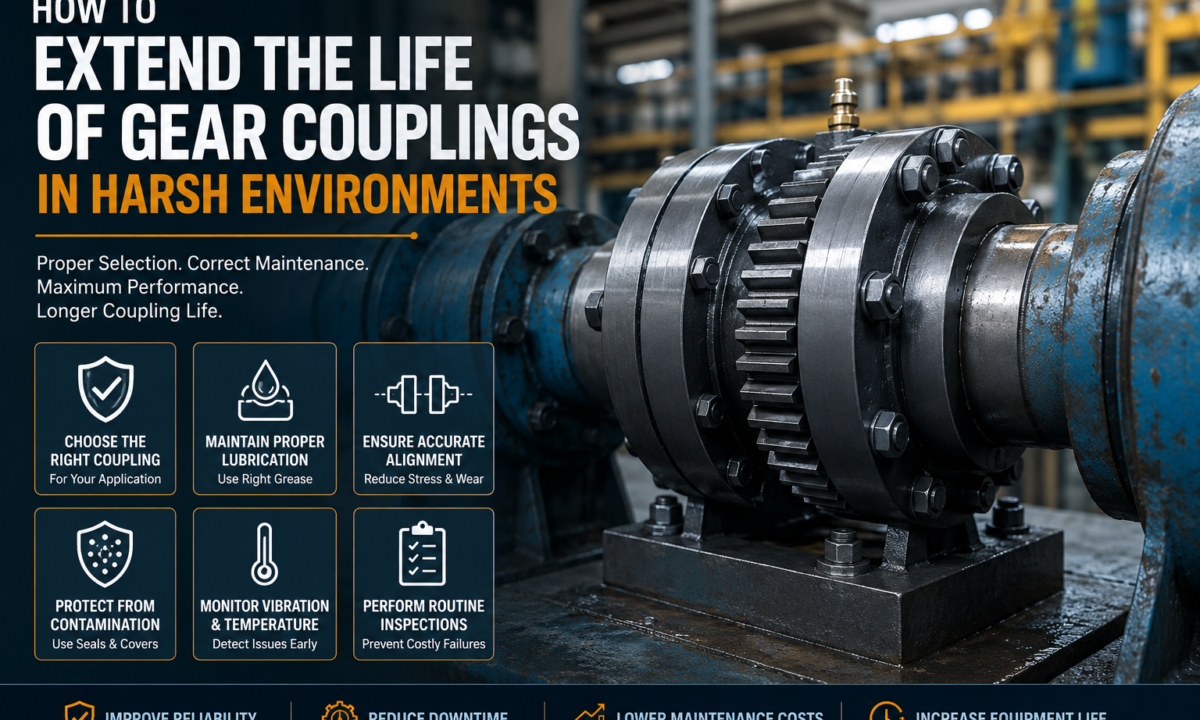
How to Extend the Life of Gear Couplings in Harsh Environments.
Gear couplings are critical components in heavy industrial operations for transmitting torque between rotating shafts while accommodating misalignment, shock loads, and high-speed applications. But industries like cement, mining, steel, power plants and marine engineering are often subjected to extreme operating conditions in gear couplings. Couplings need to be properly maintained and selected to maximize the life of a coupling. Dust, moisture, vibration, heat, and heavy loads can significantly reduce coupling life.
Unexpected coupling failure not only increases maintenance costs but can also cause costly downtime and production losses. The good news is that with the right preventative measures, industries can greatly enhance the performance and durability of gear couplings even in the most extreme environments.
Understanding Harsh Operating Conditions
Typical conditions in harsh industrial environments are:
- High temperatures
- Constant vibration
- Dust and abrasive particulate
- Exposure to chemicals
- Large torque pulsations
- Moisture & corrosion
- Shock loading and overload conditions
Over time these factors cause wear and tear on coupling teeth, seals, lubrication systems and internal parts. This can lead to excessive backlash, overheating, misalignment and eventual breakdown, over time.
Choose the Right Gear Coupling for the Application
A major mistake industries make is that they use a standard coupling for demanding environments. Each application has its own unique operating conditions, torque requirements and environmental challenges.
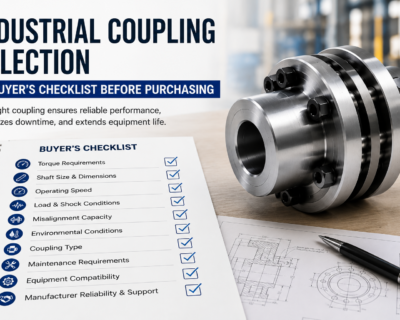
Things to consider when selecting a gear coupling:
- Torque rating
- Compatible with shaft sizes
- Tolerance to misalignment
- Speed of operation
- Heat resistant
- Environmental exposure
For heavy-duty industries, high-performance gear couplings with hardened teeth, corrosion-resistant materials and improved sealing systems are often a better choice.
Choosing the right coupling from the beginning will minimize the risk of premature wear and tear and improve the reliability of the whole machine.
Maintain Proper Lubrication
Lubrication is one of the most important factors affecting gear coupling life. In harsh environments, lubricants can become contaminated with dust, moisture, or metal particles, reducing their effectiveness.
Poor lubrication causes:
- Tooth wear
- Excessive friction
- Heat generation
- Surface damage
- Reduced torque transmission efficiency
To maintain proper lubrication:
- Use high-quality industrial grease recommended by the manufacturer
- Inspect lubricant condition regularly
- Replace contaminated grease immediately
- Follow scheduled relubrication intervals
- Use sealed couplings where contamination risks are high
In high-temperature applications, special heat-resistant lubricants may also be required.
Ensure Accurate Shaft Alignment
Gear couplings are made to tolerate some misalignment, but too much misalignment will greatly shorten the life of the coupling.
Causes of misalignment:
- Uneven loading of teeth
- Higher vibration.
- Seal damage
- Initial bearing wear
- Power consumption
Routine alignment checks using laser alignment equipment or dial indicators keep the operation smooth and reduce stress on the coupling components.
Proper alignment also enhances the efficiency of connected equipment such as motors, pumps, compressors and gearboxes.
Protect Couplings from Contamination
Industrial couplings have many enemies – dust, dirt, water, and chemicals are just a few. Contaminants enter the coupling and cause damage to internal gear teeth and lubrication systems.
Contamination control should be a major concern for industries in the mining, cement plant or chemical processing industries.
Some efficient protection methods are:
- With quality sealing systems
- Fitting couplings with guards
- Conducting routine cleaning inspections
- Immediate replacement of damaged seals
- Preventing water entry during washdowns
Even in highly contaminated environments a well-sealed gear coupling can work efficiently for years.
Monitor Vibration and Operating Temperature
Unusual vibration or rising operating temperatures often indicate developing problems inside the coupling system.
Common warning signs include:
- Abnormal noise
- Excessive heat
- Grease leakage
- Shaft vibration
- Irregular machine movement
Ignoring these signs can lead to sudden coupling failure and damage to surrounding equipment.
Industries increasingly use predictive maintenance techniques such as:
- Vibration analysis
- Thermal imaging
- Condition monitoring sensors
- Oil and grease analysis
These technologies help identify issues early before major failures occur.
Perform Routine Inspections
Routine inspections are key to extending gear coupling life. Small problems found early are much easier and cheaper to fix.
Inspection check lists should include:
- Gear tooth wear study
- Inspect seals and gaskets
- Lubrication condition Monitoring
- Checking for cracks or corrosion
- Checking alignment
- Checking bolts and fasteners
“Scheduled preventive maintenance greatly reduces unexpected downtime and enhances equipment reliability.
Avoid Overloading the Coupling
This is a common cause of coupling failures . The equipment is often run beyond the torque it was designed to handle .
Causes of Overloading:
- Fatigue of the tooth
- Break
- More controversy
- Too much heat buildup
- Break-Down
Industries should always go for couplings with a proper service factor for shock loads and varying operating conditions.
The use of torque monitoring systems can also prevent overload related failures.
Upgrade to Advanced Gear Coupling Designs
Modern industrial gear couplings are better designed using better materials, precision engineering and advanced sealing technologies.
Advanced designs can provide:
- Increased torque density
- Improved misalignment capability
- Lower maintenance needs
- Improved corrosion resistance
- Extended service life
Coupling systems can be retrofitted to improve machine efficiency and reduce maintenance costs over time.
Final Thoughts
In harsh industrial environments, gear couplings are subjected to constant stress from contamination, vibration, heat and heavy loads. However, careful selection, correct alignment, frequent lubrication and preventative maintenance can make them last a lot longer.
Industries that are investing in routine inspections and modern coupling technologies will not only see reduced downtime but also improved productivity, safety, and operational efficiencies.
A properly maintained gear coupling is more than a machine part — it’s an essential part of keeping industrial operations smooth and reliable.
FAQs
1. What causes gear coupling failure?
Poor lubrication, misalignment, contamination, and overloading are the main causes of gear coupling failure.
2. How often should gear couplings be lubricated?
Lubrication depends on usage and environment, but regular inspection and relubrication are essential.
3. Can misalignment damage gear couplings?
Yes, excessive misalignment increases vibration, wear, and heat, reducing coupling life.
4. How can gear coupling life be extended?
Proper maintenance, lubrication, alignment, and contamination protection help extend coupling lifespan.