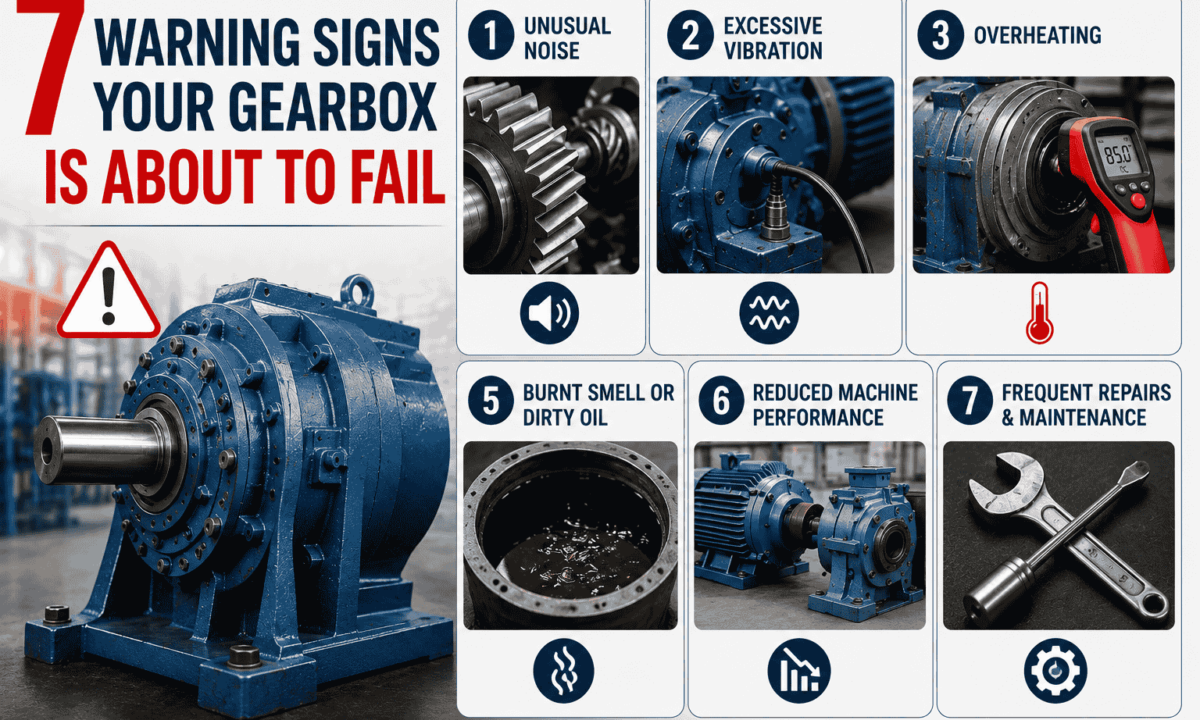
7 Warning Signs Your Gearbox Is About to Fail.
Industrial gearboxes sit quietly behind almost every major machine in factories, cement plants, mining operations, steel plants and conveyor systems. They work round the clock under heavy loads and many industries forget their real importance until a breakdown brings production to a standstill.
Hylo Transmission provides high quality industrial transmission systems that play a key role in improving the machine reliability, torque performance and operational efficiency across heavy industries. The importance of reliable gearbox solutions is particularly evident in industries where production is continuous and downtime minimal.
And the truth is, gearbox failures are costly.
A single unexpected failure in the gearbox can lead to production delays, emergency repair costs and downtime in operations which could cost industries thousands of dollars in a matter of hours. Studies of industrial maintenance have shown that unplanned downtime can reduce total manufacturing productivity by almost 20%.
But the good news is this – gearboxes usually give warning signs before they fail completely.
Early detection of these signs can help industries to avoid severe damage, reduced cost of repairs and improved reliability of machines.
So, here are the 7 signs your gearbox is about to fail :
1. Unusual Noise During Operation
One of the first things operators usually notice is strange noise from the gearbox.
If you suddenly hear your gearbox grinding, knocking, humming or rattling, it could be a sign of internal wear or damaged gears. These sounds often develop gradually, growing louder with time.
Possible reasons include:
- Worn-out gears
- Bearing damage
- Poor lubrication
- Misalignment
A functioning gearbox will run smoothly and quietly. Ignoring unusual sounds for too long can lead to serious internal damage.
Many industries have also turned to resources such as Machinery Lubrication for industrial reliability practices and gearbox maintenance.
2. Excessive Vibration
All industrial machinery generates some degree of vibration, but excessive vibration is frequently a major warning sign of gearbox trouble.
A sudden rise in vibration levels could indicate:
- Internal Components Loose
- Wear of gear teeth
- Misalignment of shaft
- Failure of bearing
Research suggests that vibration related problems are one of the most frequent reasons for failure of rotating equipment in industrial plants.
That’s why many industries now employ vibration monitoring systems to identify gearbox problems before they become costly breakdowns.
Standards for industrial vibration monitoring are also discussed at length by organisations such as Mobius Institute.
3. Gearbox Overheating
Gearboxes produce heat when they are in use, especially when they are under heavy loads. But if the gearbox gets unusually hot, it should never be ignored.
Excessive heat can weaken internal parts and degrade the lubricant performance.
Overheating is usually caused by:
- Dryness of lubricant
- Overload
- Inadequate ventilation
- Incorrect lubricant selection
- High friction on components
Constant overheating can drastically shorten the life of a gearbox and increase the likelihood of sudden failure.
This is a common problem in rotating equipment and heavy machinery and is the subject of many articles on industrial maintenance platforms, including Plant Engineering.
4. Oil Leakage Around the Gearbox
Oil leakage is one of the easiest warning signs to spot, but many industries ignore small leaks at first.
Lubrication is very important to reduce friction and protect the gears from wear . Even a small leak can, over time, reduce lubrication levels and affect gearbox performance.
Causes of oil leaks:
- Seals broken
- Worn out gaskets
- Housing cracked
- Excess pressure internally
A small oil leak can turn into a serious mechanical problem if not repaired early on.
Reliable plants and other industrial resources often emphasize preventive lubrication practices.
5. Burnt Smell or Dirty Lubricating Oil
A burning smell around the gearbox is usually a sign that the lubricant is overheating or breaking down.
Similarly, if the oil is dark, thick or contains metal particles, it may indicate internal wear.
Symptoms of lubricant contamination:
- Burning odor
- Black or dark oil
- Metal shavings
- Formation of sludge
Frequent oil checks can help industries detect gearbox problems before serious damage occurs. Many maintenance engineers use lubrication analysis techniques learned on Noria Corporation for care of industrial equipment.
6. Reduced Machine Performance
Sometimes the warning signs are not visible directly on the transmission Instead, the industries observe changes in the overall machine performance.
If the machine all of a sudden:
slows,If your car is struggling under load, giving inconsistent output or using too much energy, it may be the gearbox.
Most gearbox failures begin internally long before total breakdown occurs. A drop in machine efficiency is often one of the first signs that something is wrong.
7. Frequent Repairs and Maintenance
If you find yourself having to service, lubricate or replace parts on your gearbox more often than before, it may be nearing the end of its operational life.
Occasional maintenance is normal. But constant breakdowns are usually signs of deeper internal wear.
Typical causes include:
- Used Parts
- Incorrect installation
- Overload situations
- Poor maintenance of preventive
Repeated repairs can add up over time, making it more cost-effective to replace or upgrade the gearbox itself.
Healthy Gearbox vs Failing Gearbox
| Healthy Gearbox | Failing Gearbox |
| Smooth operation | Grinding or knocking sounds |
| Stable temperature | Frequent overheating |
| Minimal vibration | Excessive vibration |
| Clean lubrication | Burnt or contaminated oil |
| Consistent performance | Reduced efficiency |
| Routine maintenance | Frequent breakdowns |
How Industries Can Prevent Gearbox Failure?
Preventive maintenance is the best way to avoid serious gearbox problems.
Basic techniques such as:
- Routine lubrication checks
- vibration monitoring
- shaft alignment checks
temperature monitoring and regular oil analysis can greatly extend the life of the gearbox and minimize downtime.
In fact, industrial studies have shown that preventive maintenance can cut unexpected equipment failures by as much as 40%.
Companies such as Hylo Transmission provide reliable industrial gearbox systems that improve operational reliability, ensure smoother power transmission and long-term industrial performance.
Final Thoughts :
Gearbox failures don’t just happen for no reason. Most machines will give you some warning signs before doing major damage.
Industries can detect problems early and avoid costly downtime by listening for unusual sounds, overheating, vibration, oil leaks and a decline in machine performance.
In industries that rely on continuous operations, investing in high-quality industrial transmission systems from trusted companies such as Hylo Transmission can greatly improve the reliability of gearboxes and long-term efficiency of machines.
Gearbox regular inspection and preventive maintenance are not only good practices, but vital to industrial productivity and operational stability.
FAQs :
What is the most common cause of gearbox failure?
Poor lubrication, overheating, excessive vibration, and shaft misalignment are among the most common causes of gearbox failure.
How can industries reduce gearbox downtime?
Regular preventive maintenance, lubrication checks, and vibration monitoring can help industries reduce unexpected gearbox breakdowns.
Why is gearbox overheating dangerous?
Excessive heat reduces lubricant performance, increases internal wear, and can eventually damage gearbox components.