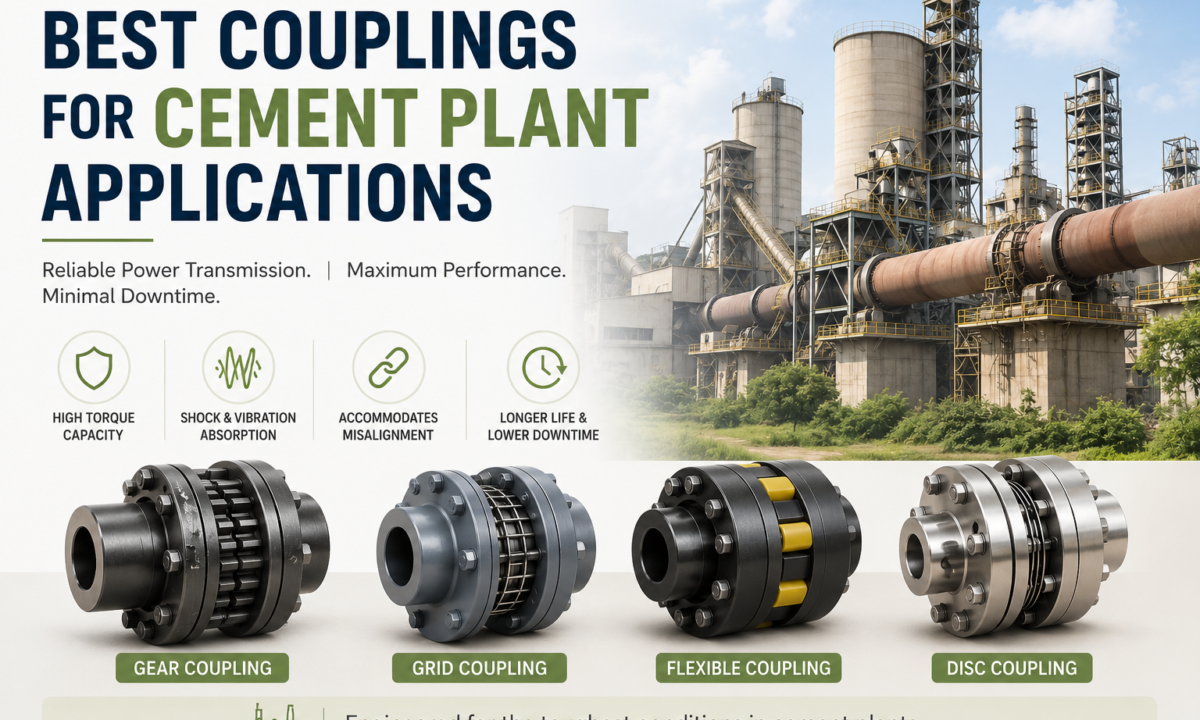
Best Couplings for Cement Plant Applications.
The cement industry operates in one of the toughest industrial environments. Heavy loads, continuous operation, high temperatures, dust, and vibration place enormous stress on machinery every day. In such demanding conditions, selecting the right industrial coupling is critical for maintaining equipment reliability and minimizing costly downtime.
Couplings play a vital role in transmitting power between rotating shafts while accommodating misalignment, reducing vibration, and protecting equipment from shock loads. Choosing the wrong coupling can lead to frequent breakdowns, increased maintenance costs, and reduced plant efficiency.
This guide explores the best coupling options for cement plant applications and the factors industries should consider before making a selection.
Why Couplings Are Critical in Cement Plants?
A typical cement manufacturing facility relies on numerous rotating machines, including:
- Crushers
- Ball mills
- Conveyors
- Bucket elevators
- Kilns
- Fans and blowers
- Material handling systems
These machines operate under harsh conditions and require reliable power transmission systems to ensure uninterrupted production.
According toWorld Cement Association, equipment reliability remains one of the key factors affecting operational efficiency in cement manufacturing facilities worldwide.
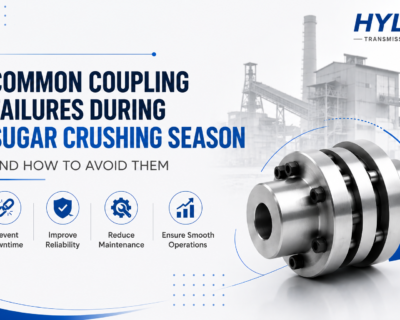
Challenges Faced by Cement Plant Equipment
Before selecting a coupling, it is important to understand the operating challenges within cement plants:
Heavy Shock Loads
Crushers and mills frequently experience sudden load variations.
Dust and Contamination
Cement dust can accelerate wear and reduce component life.
Continuous Operation
Most cement plants run 24/7, making reliability essential.
Shaft Misalignment
Large machinery often experiences thermal expansion and alignment changes.
High Torque Requirements
Equipment must transmit significant torque without failure.
These conditions require couplings that are durable, reliable, and capable of handling demanding industrial environments.
Best Couplings for Cement Plant Applications
1. Gear Couplings
Gear couplings are among the most widely used couplings in cement plants due to their high torque transmission capability.
Advantages:
- Excellent torque capacity
- Suitable for heavy-duty applications
- Handles moderate misalignment
- Long service life
Common Applications:
- Ball mills
- Kilns
- Crushers
- Heavy conveyors
Gear couplings are often preferred where high power transmission is required under challenging operating conditions.
2. Grid Couplings
Grid couplings are specifically designed to absorb shock loads and vibration.
Advantages:
- Excellent shock absorption
- Reduces vibration transmission
- Protects connected equipment
- Lower maintenance requirements
Common Applications:
- Crushers
- Material handling equipment
- Conveyors
For facilities dealing with frequent impact loads, grid couplings can significantly improve equipment protection.
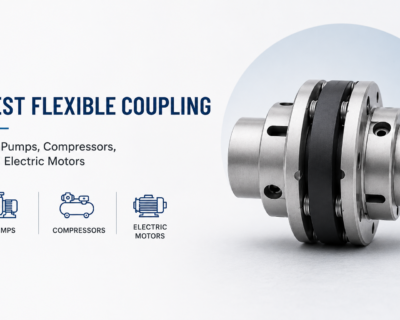
3. Flexible Couplings
Flexible couplings are ideal where shaft misalignment is a concern.
Advantages:
- Accommodates angular and parallel misalignment
- Reduces vibration
- Easy installation
- Cost-effective solution
Common Applications:
- Pumps
- Fans
- Blowers
- Auxiliary equipment
4. Disc Couplings
Disc couplings offer high precision and require minimal maintenance.
Advantages:
- No lubrication required
- High torsional stiffness
- Excellent reliability
- Long operating life
Common Applications:
- High-speed equipment
- Fans
- Compressors
Industries looking to reduce maintenance efforts often consider disc couplings for specific applications.
Comparison of Coupling Types for Cement Plants
| Coupling Type | Torque Capacity | Shock Load Resistance | Maintenance | Best Application |
| Gear Coupling | High | High | Moderate | Crushers, Mills |
| Grid Coupling | Medium-High | Excellent | Low | Conveyors, Crushers |
| Flexible Coupling | Medium | Moderate | Low | Pumps, Fans |
| Disc Coupling | Medium-High | Moderate | Very Low | Compressors, Fans |
Factors to Consider Before Choosing a Coupling
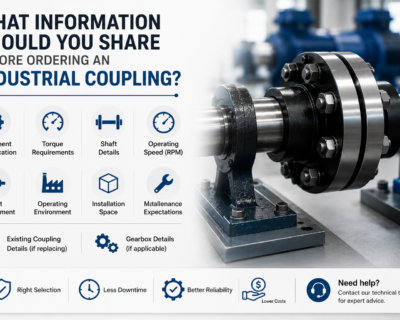
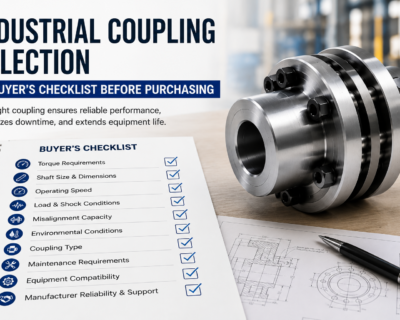
Selecting the right coupling requires evaluating several operational factors:
Torque Requirements
Ensure the coupling can safely handle operating and peak torque loads.
Misalignment Levels
Different couplings accommodate different types of shaft misalignment.
Environmental Conditions
Dust, moisture, and temperature can influence coupling performance.
Maintenance Requirements
Some couplings require regular lubrication, while others operate maintenance-free.
Equipment Type
The application itself often determines the most suitable coupling design.
For additional information on industrial power transmission and equipment reliability, resources such asReliable Plant andMachinery Lubrication provide valuable maintenance insights.
How the Right Coupling Improves Cement Plant Efficiency?
Choosing the correct coupling helps:
- Reduce unexpected downtime
- Improve equipment lifespan
- Lower maintenance costs
- Minimize vibration and shock loads
- Improve overall plant productivity
A well-selected coupling is not just a machine component—it is an investment in long-term operational reliability.
Final Thoughts
Cement plants operate under some of the most demanding industrial conditions, making coupling selection a critical decision. Gear couplings, grid couplings, flexible couplings, and disc couplings each offer unique advantages depending on the application.
For heavy-duty applications such as crushers, mills, and conveyors, high-performance gear couplings are often the preferred choice due to their ability to handle high torque and harsh operating environments.
Industries seeking reliable power transmission solutions should focus on selecting couplings based on operating conditions, torque requirements, and maintenance expectations to ensure maximum performance and equipment longevity.
FAQs
Which coupling is best for cement plant crushers?
Gear couplings and grid couplings are commonly used for crushers because they can handle high torque and absorb shock loads effectively.
Why are gear couplings popular in cement plants?
Gear couplings offer high torque capacity, durability, and reliable performance in demanding industrial environments.
How often should industrial couplings be inspected?
Most cement plants should inspect couplings during scheduled maintenance intervals to identify wear, lubrication issues, and alignment problems before failure occurs.